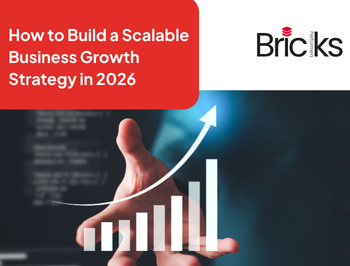
In 2026, business growth is no longer about working harder—it’s about building smarter, scalable systems. Many companies invest in marketing, tools, and teams but still struggle to achieve consistent growth.
The reason? They lack a scalable business growth strategy.
A scalable strategy ensures your business can grow without constantly increasing costs, effort, or complexity. It combines data-driven decision-making, performance marketing, automation, and the right growth partner.
What is a Scalable Business Growth Strategy?
A scalable growth strategy is a structured approach that allows your business to:
- Increase revenue without proportional cost increase
- Handle higher demand efficiently
- Maintain consistent performance
- Optimize resources and operations
Unlike traditional growth methods, scalability focuses on systems, processes, and data rather than short-term wins.
Why Most Businesses Fail to Scale
- Lack of clear strategy
- Poor use of data
- Over-reliance on manual processes
- Weak marketing performance
- Choosing the wrong growth partner
Scaling is not just about growth—it’s about sustainable and predictable growth.
Key Pillars of a Scalable Growth Strategy
1. Data-Driven Decision Making
Data is the foundation of scalability. Businesses that rely on assumptions often fail.
- Track key performance metrics
- Understand customer behavior
- Analyze conversion rates
- Measure marketing ROI
2. Performance-Focused Marketing
Performance marketing focuses on measurable results rather than just visibility.
- ROI-driven campaigns
- Optimized customer acquisition cost (CAC)
- Continuous testing and improvement
3. Conversion Optimization
Traffic alone doesn’t drive growth—conversions do.
- Improve website UX
- Optimize landing pages
- Strengthen CTAs
- Fix sales funnels
4. Automation and Systems
Automation allows businesses to scale without increasing effort.
- Lead nurturing workflows
- Email automation
- CRM systems
- Customer onboarding systems
5. Strong Sales Funnel
A structured funnel ensures consistent conversions:
- Awareness
- Consideration
- Decision
6. Choosing the Right Growth Partner
The right partner plays a critical role in scaling.
- Aligns strategy with business goals
- Focuses on ROI
- Provides long-term support
Step-by-Step Process to Build a Scalable Strategy
Step 1: Define Clear Goals
Set revenue targets, customer acquisition goals, and expansion plans.
Step 2: Analyze Current Performance
Evaluate ROI, conversion rates, and sales processes.
Step 3: Build Data Infrastructure
Use analytics tools, CRM systems, and dashboards.
Step 4: Optimize Marketing Strategy
Focus on high-performing channels and eliminate waste.
Step 5: Improve Conversion Systems
Enhance website experience and funnel efficiency.
Step 6: Implement Automation
Automate repetitive tasks to improve efficiency.
Step 7: Work with the Right Partner
Partner with experts who can guide and scale your business.
Common Mistakes to Avoid
- Focusing only on traffic
- Ignoring data
- Overcomplicating systems
- Choosing the wrong partner
- No continuous optimization
Conclusion
Building a scalable business growth strategy in 2026 is about creating systems that deliver consistent results.
By focusing on data, performance marketing, conversion optimization, automation, and the right partner, businesses can achieve sustainable growth.
If your business isn’t scaling, the problem isn’t effort—it’s your strategy.
The right approach combined with the right partner can unlock long-term success.