You might have more places in your organization to store personal data than you think. Their names might be in your CRM, their email addresses are in marketing automation systems, their payment data are in financial apps, and their employee data are in HR platforms.
There are data warehouses, cloud storage, applications, logs, backups—plus third-party systems.
It is not collecting this kind of data that is the real challenge. It’s the awareness of your personal data, where it is located, how it flows, and how it is used. Personal data intelligence is where it comes in.
With personal data intelligence, you can find, categorize, map, and understand personal and private information throughout your own data world. Rather than using old spreadsheets or an unmaintained inventory, you obtain a better understanding of both the data and the risks involved in it.
What Is Personal Data Intelligence?
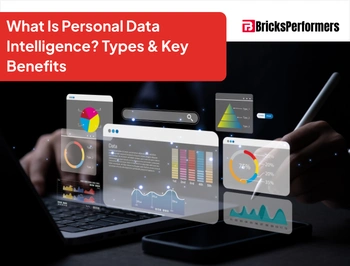
Personal data intelligence is the ability to find, identify, classify, map and understand personal data spread throughout your organization’s systems. It doesn’t just locate names, phone numbers, email addresses, or customer IDs. There also needs to be context.
For instance, if a customer’s email address is in your CRM, you can switch to that customer if his or her email address is in your CRM. You may also have the same e-mail in your marketing platform, support environment, analytics, data warehouse, and backup files.
It’s only the beginning to know the email is there. Knowing why it is, who uses it, where it is being used, and whether or not you still need it.
I’ve seen this fall-off at many organizations, and it is where they tend to get bogged down with this experience. While they offer robust security measures, they lack the full picture if they don’t give accurate visibility into personal data.
How Does Personal Data Intelligence Work?
Typically, personal data intelligence is a combination of multiple data management and governance skills.
1. Data Discovery
One of the first steps in the process of finding personal data is to identify where this data can be found. Your data could be distributed over:
- Databases and data warehouses
- Data lakes and cloud storage systems
- CRM and ERP systems
- SaaS applications
- Documents and spreadsheets
- Application logs
- Backups and archives
- APIs and third-party platforms
Rather than relying completely on manual discovery, automated data discovery can be used to locate personal data within these various environments.
2. Data Classification
Finding data isn’t enough. It’s also vital to grasp what you’re observing. Data classification can help identify information like:
- Personally identifiable information (PII)
- Financial information
- Health information
- Employee information
- Contact details
- Authentication data
- Sensitive information or regulated information
With knowledge of the type of data you’re working with, you can implement the appropriate security, retention, and governance policies.
3. Data Mapping
Next, you have to understand how to tie personal information together in different systems.
Suppose one of your customers completes a form on your website. That data can then flow into your CRM, marketing, analytics and data warehouse. That is where data mapping comes into play to help you visualize those connections.
This works particularly well for gaining an understanding of the flow of personal information across your organization as a whole, instead of examining the individual systems.
4. Data Lineage & Context
Data lineage provides additional visibility. It assists you in understanding where information comes from, how the information is altered, where information is duplicated, and how the information is used in downstream systems.
Discovery + classification + mapping + lineage = a more meaningful perspective on the personal data lifecycle.
Key Benefits of Personal Data Intelligence
1. Better Visibility Into Personal Data
Information not found is information that cannot be managed.
Personal data intelligence provides a better understanding of the whereabouts of personal information throughout your organization. That’s important because data can be sensitive and end up in unexpected places, like development environments, analytics and monitoring platforms, old files, or backups.
The increased visibility will help you to identify those “out of sight” data stores and determine what’s in need of attention.
2. Stronger Data Governance
Good data governance is all about context. You need to know:
- Who owns the data?
- What information does it have in it?
- What was the purpose for its collection?
- What are the sites where it is being used?
- Who can access it?
- How long will its retention period be?
Governance decisions are more actionable as personal data intelligence joins the dots.
3. Improved Data Privacy and Compliance
Understanding privacy requirements is often subject to how you know the collection, processing, storage and sharing of personal information. Accurate personal data discovery and classification can aid in activities like:
- Data inventories
- Records of Processing Activities:
- Privacy impact assessments
- Retention reviews
- Data-subject requests
- Compliance assessments
Data intelligence for the personal data sector is not meant to replace your legal and compliance teams. It provides them with more information to give them to work with.
4. Faster Data-Subject Requests
Suppose a customer requests that you remove his/her personal data.
Where do you start?
When there are 20 or 30 systems, they must try to find all of their information; it can be slow and prone to error.
Personal data intelligence can help you discover related records and find personal data in related systems. This can make things easier to handle, like access, correction and deletion requests.
5. Reduced Data Security Risk
You don’t want to give your personal information to someone you don’t know.
With the skinny on where sensitive data resides, your security and data teams can then find problems like excessive access, exposed storage, unnecessary copies, or outdated information.
The appropriate controls, such as access restrictions, masking, encryption, tokenization or deletion can then be applied.
6. Better Data Minimization
The retention of personal data for an eternity is not always a wise choice.
When you have a clearer view you can spot duplicate, out-of-date or unnecessary information and check if it is still necessary.
This will help you to have the appropriate amount of storage for the data that is truly necessary for your business reasons and not just for the sake of storage.
7. Safer AI and Analytics
You might need significant data for your AI and analytics initiatives. But your AI and analytics tasks might require a lot of information. However, before putting personal information in an AI, machine learning, or analytics environment, it is necessary to understand the contents of the information.
Why Is Personal Data Intelligence Important?
Your data environment is probably becoming more distributed. New stores of personal data or places where the data is used can be created by cloud platforms, SaaS applications, data lakes, data warehouses, AI tools, and third-party services.
Static spreadsheets are not going to cope with that environment.
Personal data intelligence provides you with a more continuous understanding of your information. Data discovery, data classification, data mapping, data lineage, privacy, and governance enable you to leverage the data you already use and have the right to make better decisions.
Final Thoughts
With personal data intelligence, you can gain useful, actionable visibility of all your personal data from multiple sources. If you are aware of your personal information, its location, movement, and usage, you can handle it with confidence.
It’s not just about gathering more data for your data, privacy, security, and compliance teams. An awareness of the personal data you’ve already got and its careful, safe and effective handling.
Discover where your personal data lives, how it moves, and how you can manage it more effectively. Talk to our data experts today.